
Prehospital care
The golden hour is under pressure: MERT, drones and prolonged field care
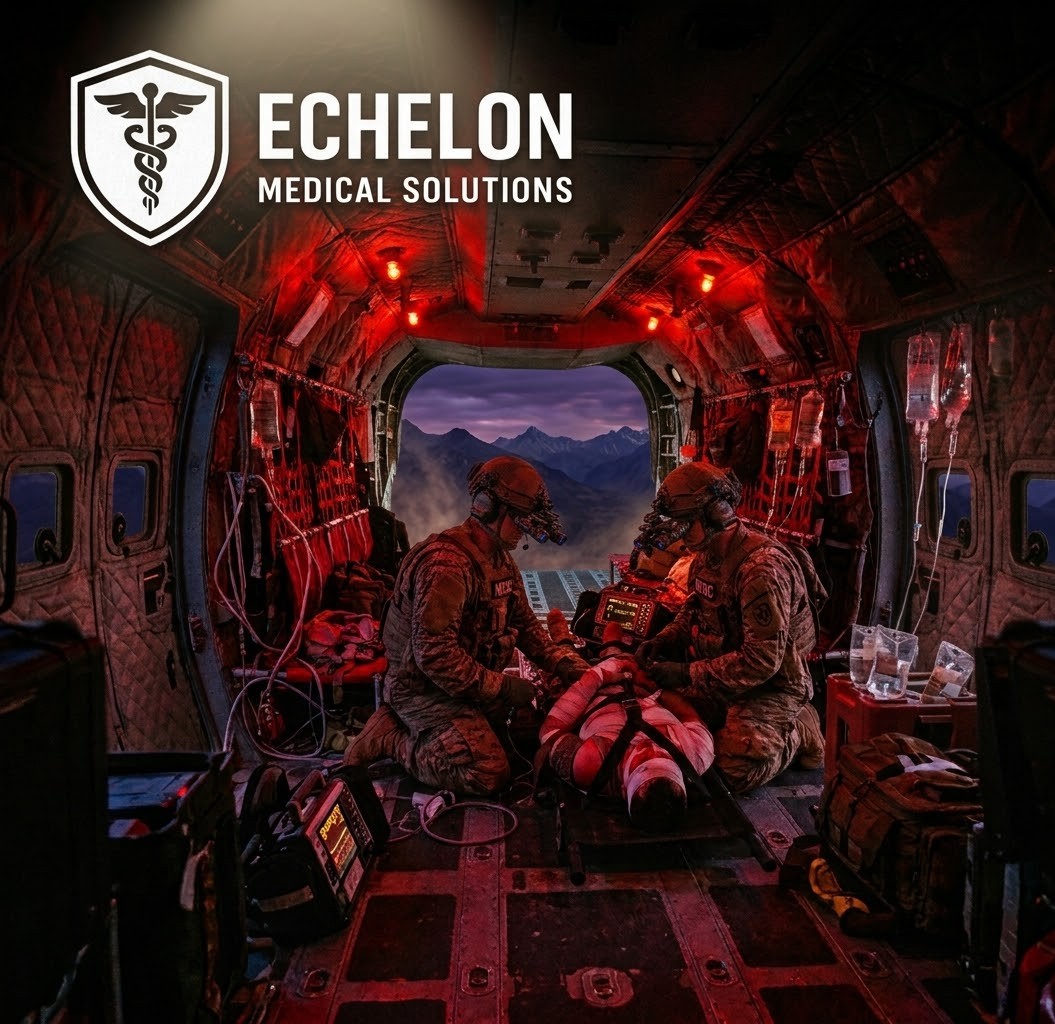
The Medical Emergency Response Team changed how prehospital medicine thinks about what can be done forward. A physician led resuscitation team, flown to the point of injury by helicopter, delivering hospital level intervention within minutes. It improved survival figures for casualties who would previously have died before reaching a surgeon.
It also rested on conditions that cannot be assumed everywhere: air superiority, a permissive route to the casualty, and an evacuation timeline measured in tens of minutes. Take those away and the model has a problem.
What changed
In a contested environment with a persistent drone threat, flying a slow, valuable aircraft toward a casualty and back is a risk calculation that sometimes comes out the wrong way. When the aircraft cannot come, or cannot come soon, the casualty can stay forward for hours, sometimes days, held by the team on the ground.
This is not a new idea. Special operations and remote medicine have worked to long timelines for years. What has changed is that it is now a mainstream planning assumption rather than an edge case, and that shift has consequences for anyone who trains responders for austere or high risk work.
Prolonged field care, in practice
Prolonged field care is the discipline of keeping a casualty alive and stable, forward, when evacuation is delayed. The emphasis moves away from rapid procedures and towards sustained management.
- Get the resuscitation right early. Haemorrhage control, blood products where they are available, a secured airway. You will not get a clean second chance at these for hours.
- Nurse the patient over time. Repositioning, pressure area care, catheterisation, temperature management, and analgesia and sedation strategies that can actually be maintained with what you carry.
- Monitor and trend. Recognising deterioration from a set of numbers on a card, not a machine alarm.
- Document, and reach back. A clear clinical record, and a link to a physician for decision support if you can get one.
- Manage the logistics and the people. Oxygen, power, warmth, and rotating whoever is doing the care so they are still functional at hour ten.
What it means for training
A trauma course can no longer stop at the first ten minutes. Teams working where the evacuation plan has more question marks than it used to need to rehearse the handover that never comes: the casualty who is still with them an hour later, then two.
That is the thinking behind our Prolonged Field Care and Remote and Austere Environment Medicine training, and behind building the same content into bespoke programmes for teams whose old assumptions no longer hold.