
Blog
Counterfeit Tourniquets: What the Research Shows
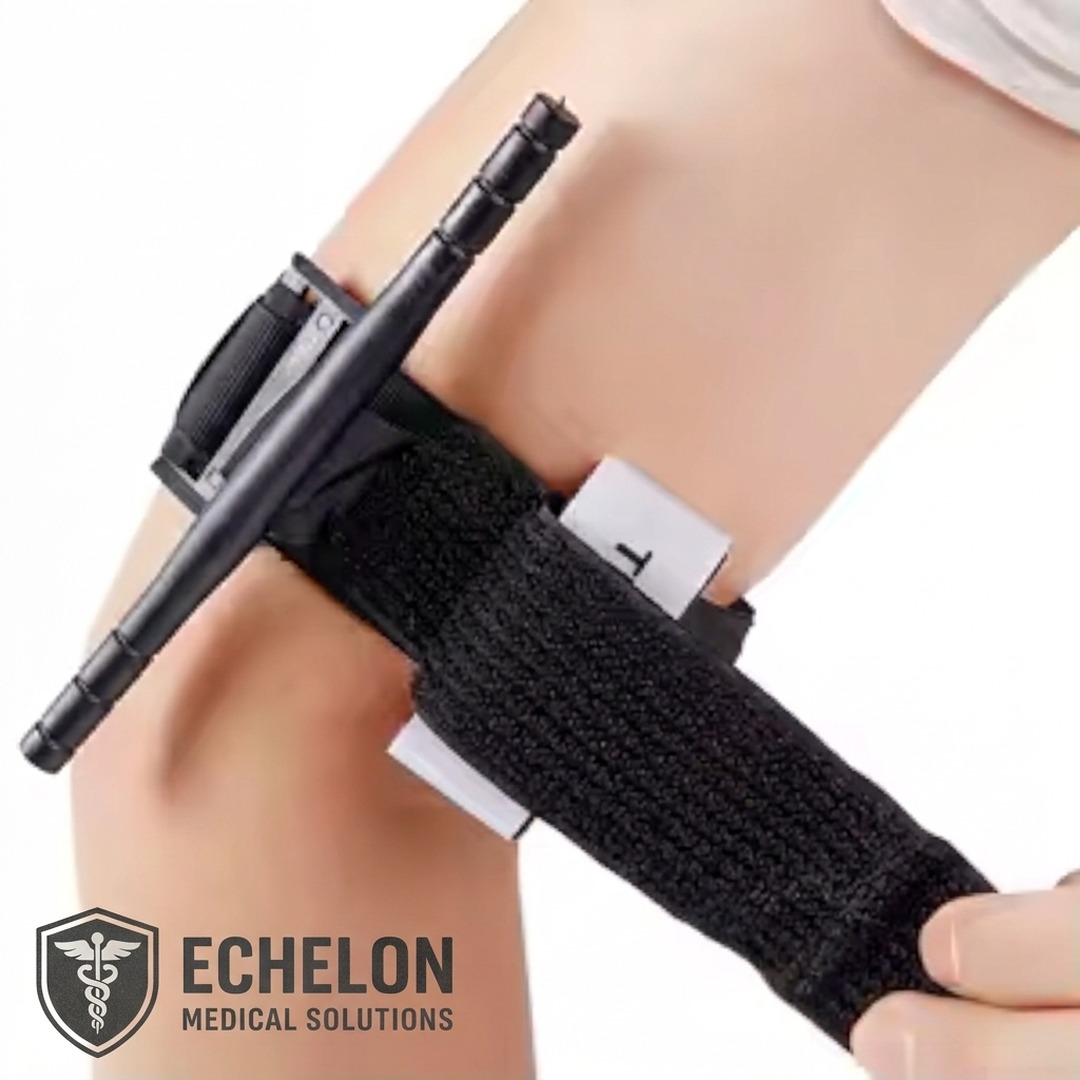
Counterfeit and uncertified look-alike tourniquets are widely available online, and published testing shows they perform far worse than the genuine device. A tourniquet is the one piece of kit that has to work the first time, so it is worth knowing what the research says and how to check what you carry.
Why the market is flooded
Demand created the opening. The Stop the Bleed campaign trained civilians to apply tourniquets, which raised public demand and brought new commercial devices to market faster than regulators could test them (Lagazzi et al., 2023). Most of the widely available devices have never been independently tested, so their real performance is unknown.
Counterfeiters and look-alike sellers fill that gap. These devices are sold on large online marketplaces, often with photos that look like the genuine product, at a fraction of the price. A buyer often cannot tell from the listing, and sometimes cannot tell from the parcel either.
The price gap
Online wholesale listings for CAT-style tourniquets, including on Alibaba, typically show about $1 to $7 a unit at minimum orders of ten or more. A genuine North American Rescue CAT Gen 7 retails at around $30 to $35. Price alone does not prove a device is inferior, but a gap that large is a reason to ask for evidence of testing before you buy.
What the testing found
In a 2023 bench study, genuine CATs applied about 4.6 times the force of look-alikes. Lagazzi and colleagues compared 25 certified Combat Application Tourniquets with 50 commercially available look-alikes on a manikin leg, testing one-hour and six-hour applications and measuring force, force variation and rupture.
| Measure | Genuine CAT (n = 25) | Look-alike (n = 50) |
|---|---|---|
| Initial force applied | About 65 N | About 14 N |
| Ruptured during testing | 0% | 4% |
The difference in force was statistically significant (P < .001). The authors concluded that the look-alikes applied significantly lower force and ruptured more often, which could affect performance when the public is called on to control bleeding.
One caveat matters. This was a bench test on a manikin, not a trial on patients. It shows the look-alikes cannot generate the pressure of the genuine device. It does not measure survival.
When one fails in the field
A 2024 case report in the Journal of Special Operations Medicine links a CAT-like tourniquet to a death. In April 2022 a 19-year-old Ukrainian soldier lost both legs below the knee to an antipersonnel landmine, and CAT-like tourniquets were applied to both. During evacuation the windlass on the right-hand tourniquet broke and the bleeding restarted. There were few medical staff for the number of casualties, so it went unaddressed for an unknown time and he died from haemorrhagic shock.
It is a single case, not a statistic. It shows two things worth knowing:
- A device can hold at first and fail later, so a tourniquet that looks fine at the point of injury can still be a problem in transit.
- Reassessment is part of the treatment. A tourniquet is never “on and done”.
Why a fake is worse than nothing
A failed tourniquet costs you the seconds you did not have. Someone applies it, sees a device on the limb and moves on to the next problem. If it is not stopping the bleed, or stops working later, that false confidence is the danger.
This matters most for anyone who carries kit for other people: close protection teams, family offices, venues, event medics and security staff. Your principal or guest is relying on a device you chose, and they will never inspect it themselves. The medical side of a protection plan deserves the same scrutiny as vehicles, routes and radios, including where each tourniquet came from.
A five-point kit audit
You can check your kit in an afternoon. Start with these:
- Buy from the manufacturer or an authorised distributor, never an anonymous marketplace seller.
- Treat a price far below the going rate as a warning sign.
- Trace every tourniquet already in vehicles, residences, go-bags and first aid kits. Where did each one come from?
- Choose devices from the Committee on Tactical Combat Casualty Care (CoTCCC) recommended list, and train with the exact model you carry.
- Replace anything you cannot trace, and reassess every applied tourniquet, especially during transport.
If you are responsible for a team, a family office or a venue and want a medical readiness review, get in touch with Echelon Medical Solutions at operations@echelonmedicalsolutions.com.
Sources
- Certification Matters: A Comparative Performance Analysis of Combat Application Tourniquets versus Non-Certified CAT Look-Alike Tourniquets, Lagazzi et al., Prehospital and Disaster Medicine, 2023 (abstract)
- Limb Hemorrhage Control Failure with Counterfeit Tourniquet: A Ukrainian War MEDEVAC Case Report, Lagazzi et al., Journal of Special Operations Medicine, 2024 (abstract)
Study figures are taken from published abstracts. Price figures are typical online listings and vary. Check the full papers and current prices before quoting them.