
Community
The UAE’s Good Samaritan law: what it actually protects you for
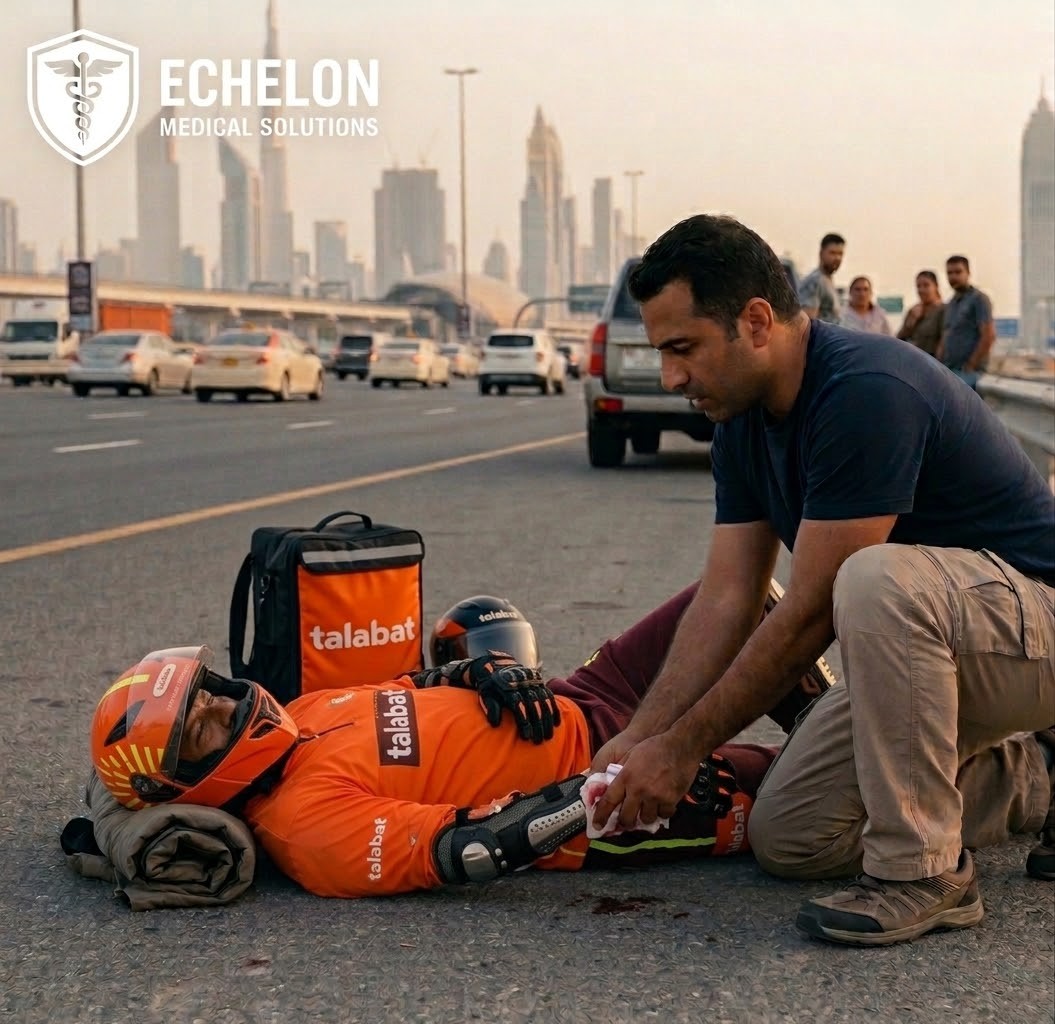
A motorcyclist goes down on Sheikh Zayed Road. A colleague drops at his desk. A swimmer is dragged out at a public beach. In nearly every case there is someone close by with the training to help, and in nearly every case that person hesitates for the same reason: what happens to me if I step in and it goes wrong.
For a long time that was a fair question. In 2020 the UAE changed the answer.
What the law says
Federal Decree-Law No. 15 of 2020, usually called the Good Samaritan Law, says that a person who in good faith gives assistance or attempts to rescue someone in an emergency cannot face criminal or civil liability for the outcome, as long as they were not grossly negligent and did not intend harm. The UAE was the first Arab country to put this into law.
Put plainly: if you stop to help someone in a real emergency, do your honest best within reason, and it still goes badly, the law is written to protect you rather than punish you.
What it does not do
It protects reasonable help. It is not cover for reckless or grossly negligent actions, and it is not a licence to try procedures you have seen once on a phone.
- It applies to genuine emergencies, not to situations where professional responders are already there and in charge.
- It does not require you to have medical training, but a bystander and a paramedic are not held to the same standard.
- It sits separately from the professional duties and scope that already apply to registered healthcare workers acting in a clinical role.
What good faith help looks like
For most people it means the basics, done properly. Make the scene safe. Call 998 or 999. Control catastrophic bleeding with pressure, or a tourniquet if you carry one and know how. Start CPR if the person is not breathing. Put an unconscious breathing casualty on their side. Stay until the ambulance crew takes over.
It does not mean cannulating a stranger on a pavement because you watched a video about it.
Why the law is only half of it
The legislation removes a barrier. It does not hand anyone a skill. The people who change an outcome on a roadside or a pool deck are the ones who have packed a wound, applied a tourniquet and done chest compressions before, under some pressure, with someone watching.
That is the case for a proper workplace first aid programme, or a FREC course, or Stop the Bleed run across a whole team. The confidence to act comes from having already acted.
This is general information about what the law is and what it is for. It is not legal advice. For how it applies to a specific incident or organisation, speak to a lawyer qualified in the UAE.